

As our third date, I invited my husband to my brother’s wedding in Idaho. We’d had some pretty good dates so far, and I figured, “Why not?” We’d been in network with each other for several years; if he was a serial killer or something, he was hiding it well. Why not just leap, and figure out if our bond was strong enough to hold us through the fall?
I got a lot of weird looks for bringing a relative stranger to an internal family affair (my family was not one into whom outsiders were often invited), let alone one who was…rather different. Geof knew how to earn familial love, but he was a far cry from my highly proper Jewish grandparents, or the bride-to-be’s Mormon family. I will forever have in my memory the mental picture of going to a wild park with the bride’s family, where Geof stripped to the waist to get into a stream. The faces of the little Mormon girls staring at his full side tattoos and nipple rings was priceless.
I did, at the last minute, ask Geof to be the photographer as well as my date, so it would seem less weird. But the decision to ask him seemed natural. Why wouldn’t I invite this newcomer deep into my life? What could be the downside?
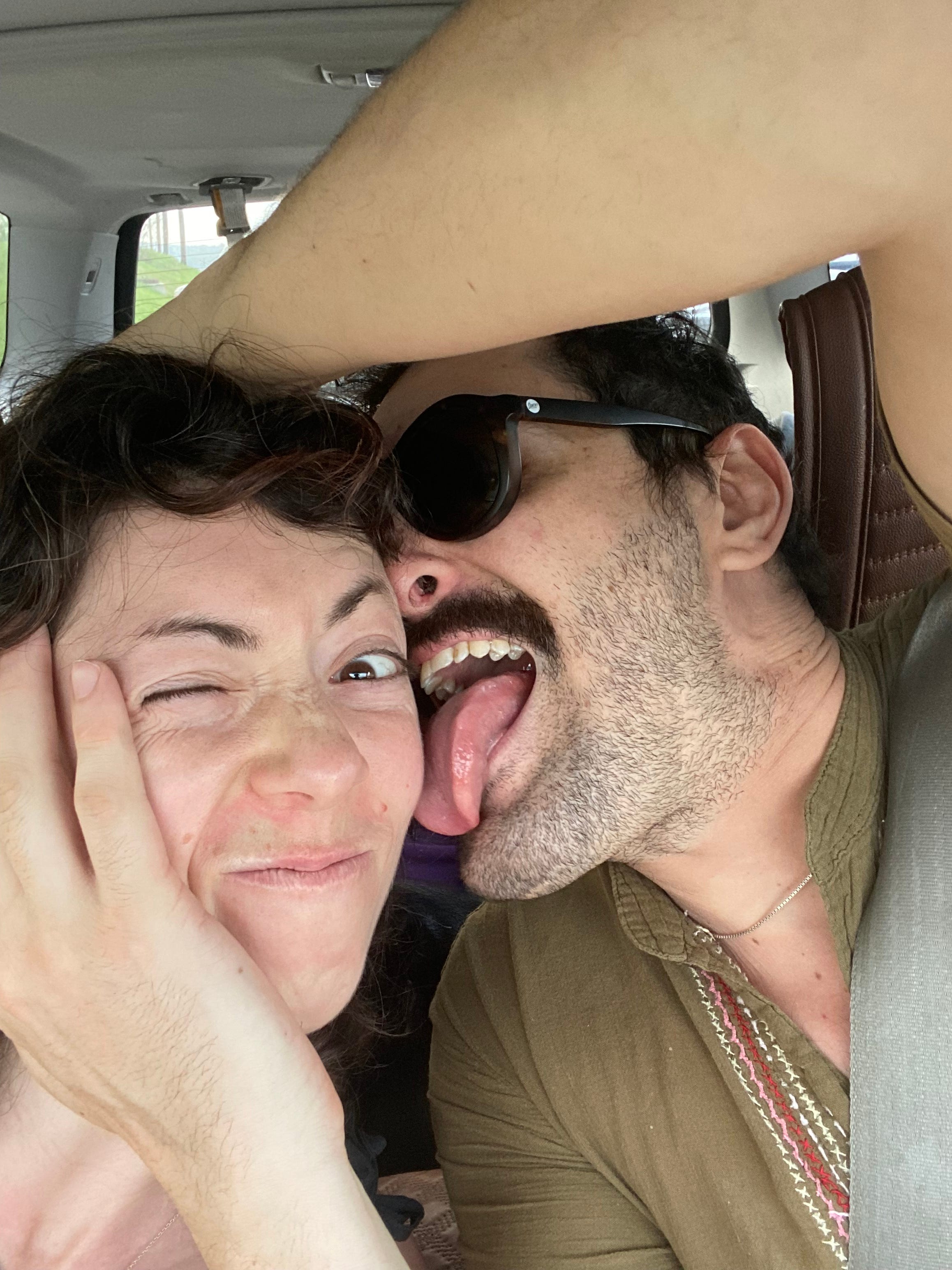
Six years later, Geof and I are making the same sorts of choices together. We’re in Asheville currently. Our home in Bastrop is hosting two women who we invited into our life on a day’s notice of thinking about it, and only a combined few days - or less - of knowing each of them. Meanwhile, our Asheville home, like our Bastrop one, is becoming host to a stream of friends and strangers passing through.
One of our Bastrop housemates asked recently about why we’d taken her in. We hadn’t needed a housemate. We didn’t have a reason to trust her. She just needed a home. Why should we have not only given her a place to live, but offered it proactively and let her stay far beyond the initial flare of the crisis she was in?
It got me thinking. Why do we do such things? What is different about me, and Geof, that we adopt stray humans left and right - including family - when others (though not all; I know friends more welcoming than I am!) consider for months before bringing even a friend to stay? Have I ever been burned? And why didn’t it change me when I did?
My hope in writing this article is to open your mind a little around the idea of trust.

So many of us wait for proof before we open our hearts. We want to know if someone is The One before we date them exclusively; want to read references before we bring in a colleague; want to hold our hearts in reserve when we make friends. But I have found much more value in the axiom of “filter for kindness, trust wholeheartedly, and know when to say goodbye.”
Here’s why.
It all started when I was a child, doctor…
I grew up isolated. My parents both worked until mid-evening, taking joy and benefiting the world in their professions, and trusting me and my brother to nannies, games, and books until they got home for dinner. They didn’t have time for friends - they didn’t even have time for themselves. I can count on one hand the number of times I remember friends (theirs or mine) coming over for dinner.
I, on the other hand, seemed to have no sense of personal property. I made friends by giving them things. I thought that giving them me didn’t have much value - I was too shy to be interesting - and I don’t think I put much value on what I owned, though some of it I certainly missed after offering it to others. However, I was privileged enough that I could afford to give things away.
As I grew, even after I developed social skills, I still didn’t see much value in stuff. Stuff was just stuff. If people liked it, why not give it to them? I felt so much joy when people gave gifts to me, even tiny ones like a bracelet of thread or a pair of guitar-pick earrings. I’d wear them until they fell apart.
I lived in housing co-ops during college. Their communal food and communal spaces appealed to me. Why not share food, and cook for everyone? Why not host parties to which everyone was invited?
When I started hosting Authentic Relating in the summer before my senior year, I invited anyone who wanted to be there into the facilitation team. I just didn’t realize there was another way to do it.
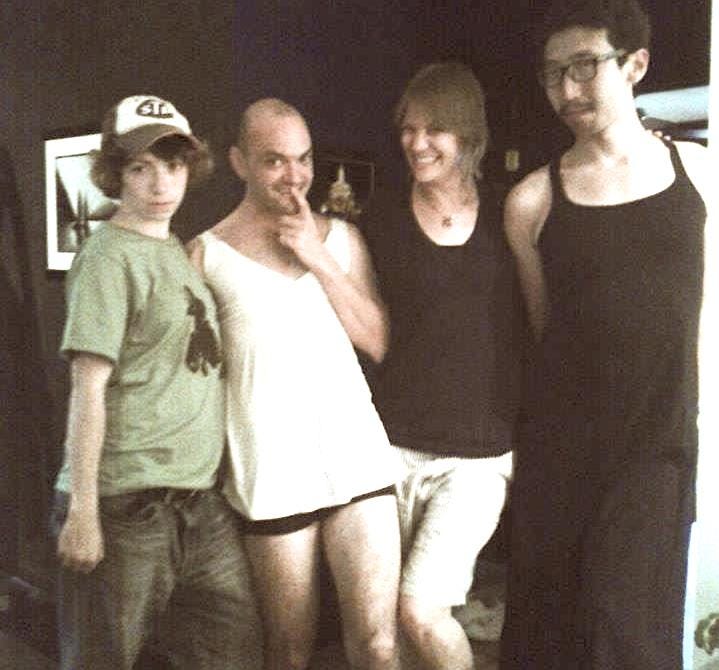
After college, I fell into a period of being houseless. I had been kicked out of multiple homes - not everyone appreciated the “anyone is welcome anytime!” mentality - and I couldn’t face the idea of entering another, only to have the process repeat. So I dropped my suitcase off at the house of various friends, and spent days at a time sleeping on floors and couches with everything I needed stuffed into a backpack in the milk crate on my bicycle.
So many friends were generous to me during that time, even friends that didn’t have much generosity to spare. I remember one who lived in a tiny two-bedroom flat with a child and husband. The kid’s room was more like a closet and the living room was the only rest space they had. But they let me take up a third of it with my clothes, and sleep there whenever I liked.
My trust did sometimes have consequences. Once, a friend offered me a space at the corner of the highest-crime street in Austin. I huddled on a mattress while police sirens went by outside, and watched my things get flooded during a rainstorm. Another time, I accompanied two men I’d met on the street that day in breaking into a park after dark and hiking through the wilderness to a camping spot with their friends. That one could easily have gone real bad. My parents were constantly terrified for me.
Whenever I had a place of my own, I reciprocated. I let friends crash with me often, especially when they themselves didn’t have a good place to go. I hosted a million co-working sessions, dinners, parties, and social events. I invited my mom to live with me after her divorce. I housed a stream of partners to visit, which also led to some…questionable scenarios. Those are a lot less comfortable when you can’t kick the person out of your house.
For every act of karma I did - every minute of space I held, or item I gave away, or couch I offered, or money I sent to an artist friend - I was paid back whenever I asked for something I needed myself. The cycle went round and round.
The Home Days
Eventually, in my late twenties, I bought my tiny house. I got one on wheels, so if I got kicked out, I could just take it with me. It was the first time since my youth that I’d lived in one home for more than two years. (Later, some of my landmates did indeed ask me to leave, but others on the land sided with me and the family that asked ended up leaving. It was a confusing and redeeming change.)
My house was on a property with a main house and 6 acres of land. This new home offered more options. Now Geof and I could invite friends in need to stay for a week, a month, or longer. We built another tiny house to have more space. We hosted large events around holidays, so those without family to visit had somewhere to go.
Hosting wasn’t the only important piece. One can offer a room with a sense of reserve. A list of rules. An attitude of “prove you’re not going to be a problem”.
We had house norms we’d give people, but they were simple and they were formed as a result of trespasses past, rather than trespasses anticipated. This is a big point - creating a long list of rules because of what you’re afraid MIGHT happen, beyond basics like “take your toilet bucket to the compost when it’s full” (okay, maybe that’s not a basic for everyone ;) ) leads to a sense of self-protection. You have to think about all the ways people could fuck you over.
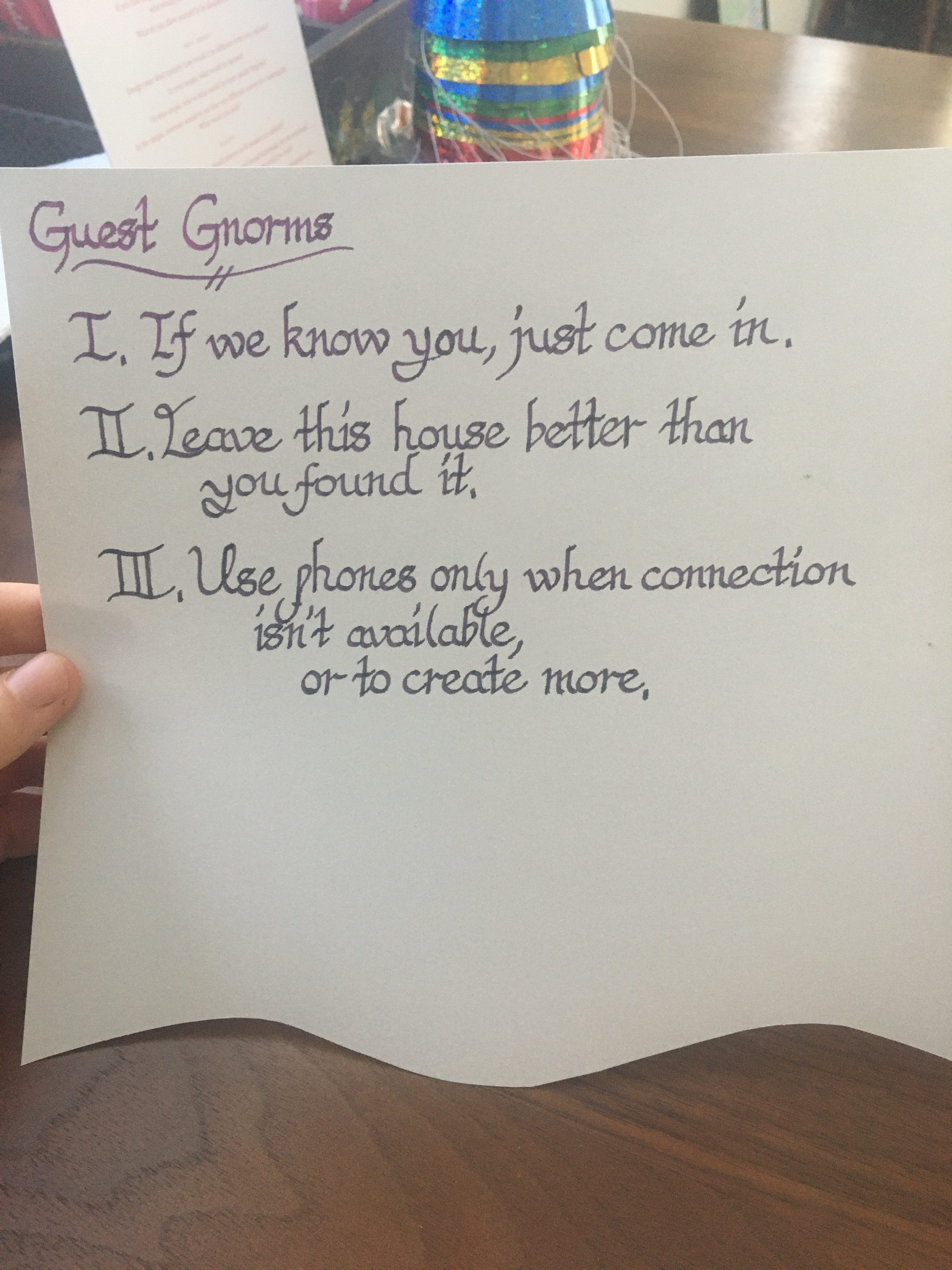
For projects like our land community in Asheville, this makes sense to an extent, because we need to let potential landmates know what they’re buying into - for instance, can they run an Airbnb off the property - but even then, we’re trying to keep to need-to-know, with a lot of open space for “committees will decide this when they need to” and “every decision should have a check-in date to see if it still fits our needs”.
Anyways, when we offer our space or support, we try to do it with an attitude of “you are welcome here. Every part of you. Don’t hide in advance; don’t try to make yourself small because it will be “less trouble”. Be honest with us about your needs, and we’ll be honest with you about ours.
We’ll trust you until you give us a reason not to.”
My principles of love
I believe that when someone is struggling, what they need is a place - emotional or physical - where they don’t have to self-monitor. Where they can be welcomed with open arms.
I believe that we don’t get enough love. That if you trust people, they become trustable (to a certain extent). And that if there is a choice between believing that people are innocent until proven guilty, or guilty until proven innocent, I am happiest when I live by the former.
This welcoming, however, is a constant practice. I have to remind myself to trust. I am a naturally safety-oriented person, and my first response, when someone wants to stay with me, is often contraction. It is a choice to open and to welcome in.
This has become easier since a wonderful rationality teacher, Duncan Sabien, gave me words for what I was trying to avoid.
Knights and Stags
I’m going to give you the metaphor that Duncan gave me. It starts with game theory, and a world I’ll ask you to step into.
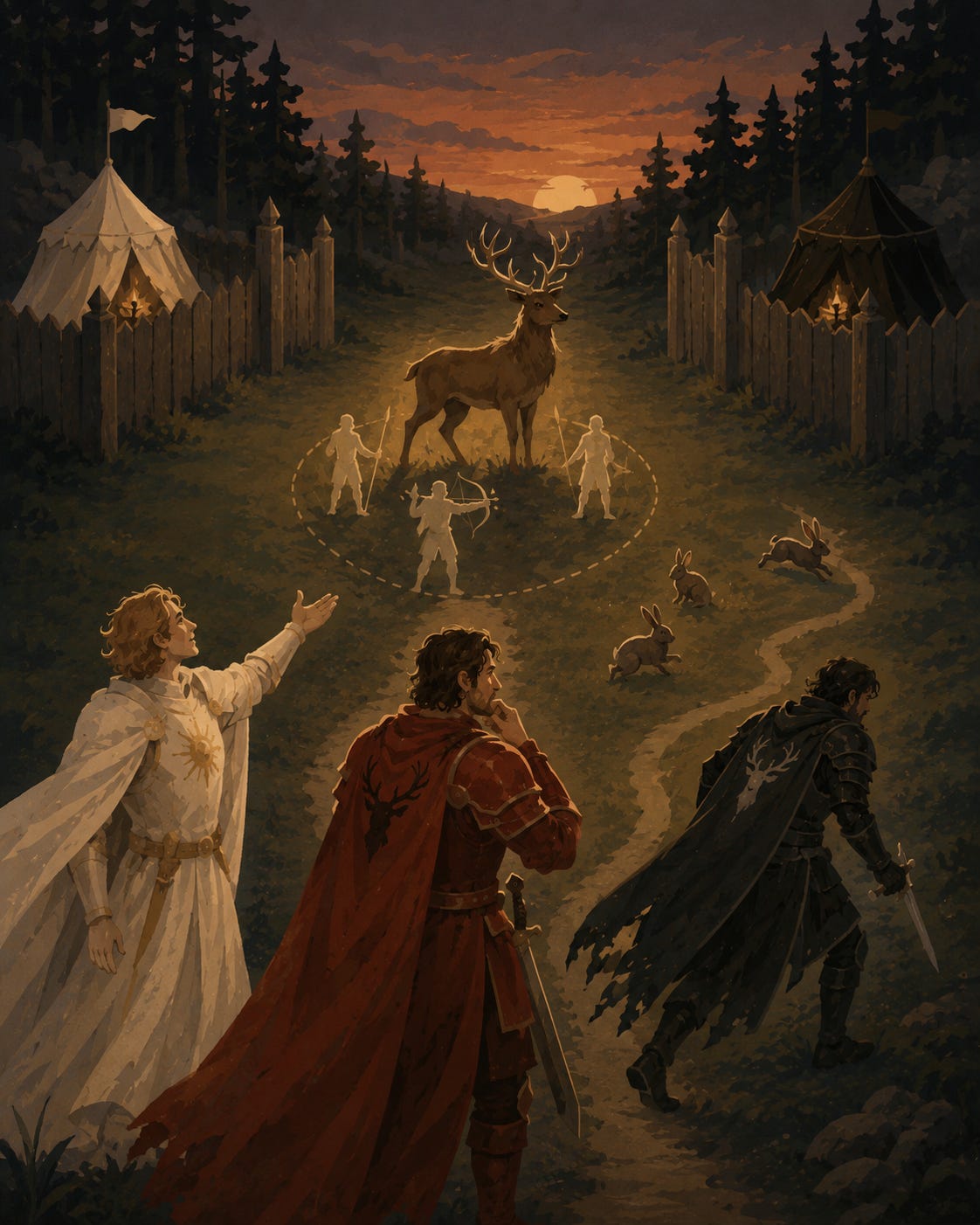
You are with a group of friends, hunting rabbit and stag. (If you’re a vegetarian, I invite you to imagine that the rabbits are made of carrots, and the stag of seitan.)
Any of you, individually, can catch a rabbit. But it takes the whole group of you to catch a stag. Catching a rabbit feeds you for a day, but a stag feeds you for a week. If even one of you decides to go hunt a rabbit instead, they will catch it, and whoever voted for stag will get nothing (it’s a fair assumption that the defector won’t want to share).
For whatever reason - soundproof walls between your campsites? The will of an evil DM? - you can’t talk with each other about your choice beforehand.
This is, essentially, the Prisoner’s Dilemma. Do you choose to trust that everyone else will prioritize the communal good and hunt stag? Or, do you think there will be at least one person - perhaps even you - that would choose rabbit, in the absolute certainty that they’ll eat tonight?
The interesting part of this metaphor, for our current question around trust, comes from the idea of the Three Knights. (Apparently you are knights out hunting. Don’t ask me, it’s Duncan’s story.)
The White Knight will always hunt stag. They believe in the goodwill of the collective. Why would anyone not hunt stag? they ask. This person is usually the one exhorting others to action. They may be singing at the time.
The Red Knight is the White Knight….after a few disappointments. They choose stag at first. But then they went through a couple rounds of someone else choosing rabbit. They’re still open to choosing stag, but they’re going to need some convincing.
The Black Knight is the one that chose rabbit. The Black Knight always chooses rabbit. They started out a White Knight (or, by nature, a Red Knight). But now they’ve been burned enough not to trust. It’s possible that if the rest of the group consistently, every time, chooses stag, they might change their mind. But who will keep choosing stag after the Black Knight has left them hungry a few knights in a row?
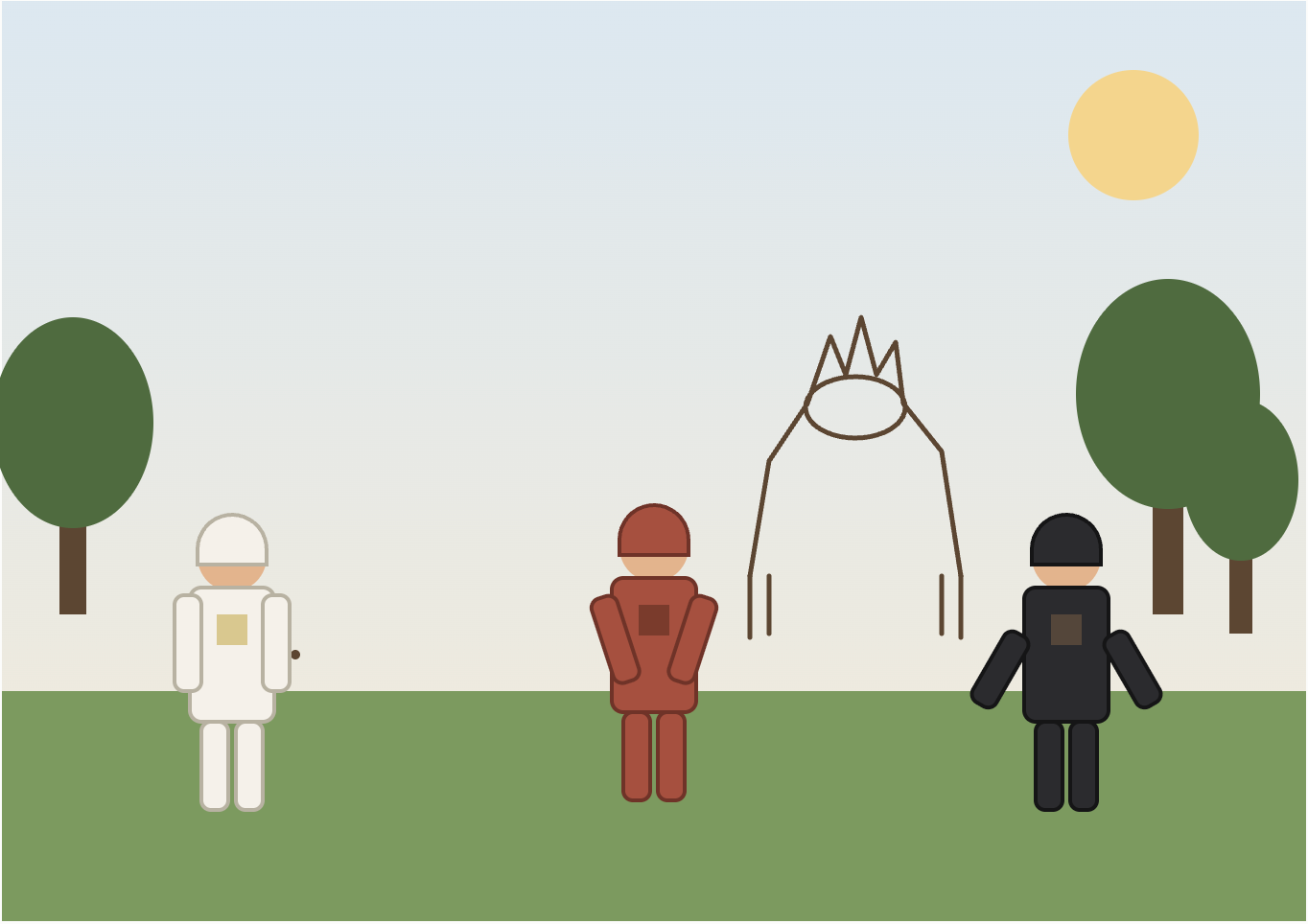
What I take from this metaphor is:
White Knights are often seen as naive. There is no White Knight over the age of twenty, I believe - at least none who live in the world outside their family - who has not been screwed over. So White Knight is, eventually, a choice.
Now, many people will try to protect White Knights. We crave the naivete and trust that these people bring; it reminds us that there is good in the world. But there will always be Black Knights who have been trodden in the dirt enough to believe that nobody is safe, and that White Knights are in fact an affront to the hopes and dreams they once had.
To stay a White Knight requires effort. I have to remind myself, again and again, of how much joy I have gotten from keeping my heart open. Of how the friends who showed themselves, eventually, to have a Black Knight in their soul, also shared beautiful moments with me. That the choice to hunt stag is as much about environment as it is about personality. And that by being a White Knight, I raise the chances of showing Red Knights that there is still a reason to trust.
Keeping Oneself Safe
Despite wanting to welcome everyone, Geof and I do try to create basic levels of safety. Our choices don’t just affect us; they affect anyone we’re living with at the time, usually at least a few other landmates (who, these days, we pick on the basis of them being okay with our degree of communalism).
My personal metric for choosing who to invite is, “have they shown themselves to be kind?”
When I reflect on the ways they’ve shown up with others, and with me, have I seen generosity or contraction? Extension or withdrawal? When others are around, do they work to be welcoming?
If the answer to these is yes, that person is usually worth hosting. Often, whatever difficult situation they’re in is a result of being too inviting; and hosting them will have a net benefit to the world, because people like this make the lives of others better.
We also try to be proactive about giving feedback. If someone’s actions are annoying us, or if we hear beef from other landmates, we talk about it with that person. We check in with our permanent landmates to make sure that no frustrations on their part are going unvoiced. We have a norm on our land in Bastrop that whoever invites a guest is responsible for gathering and passing on any concerns that occur.
Thus far - having hosted at least 10 friends and family on our land, for an average of 1-2 months at a time - the benefits have far outweighed the concerns.
I hope that you will try on this form of welcoming. Even if you don’t have a room or couch to share, you have an ear that someone out there needs. You have a few dollars to devote to charity or to a friend’s Patreon. You have a hand you can put on someone’s back. An appreciation you can write to a friend who is struggling, or someone in the past who has made a difference to you.
You can be a tiny reminder that the world contains White Knights and Red Knights - and those humans can change someone’s life.
Your Loving Thought-Dom,
Sara Ness